Sometimes I write about technology in an attempt to demystify gizmos and gadgets for the masses. Here’s an example where I wanted to explain internet phone service to some friends. It was just convenient to park it here between the casserole and brownie recipes – which by the way I’ll resume posting next week. I’ve been taking some time off from staring at computer screens for the benefit of my own dwindling sanity and my spring garden’s productivity.
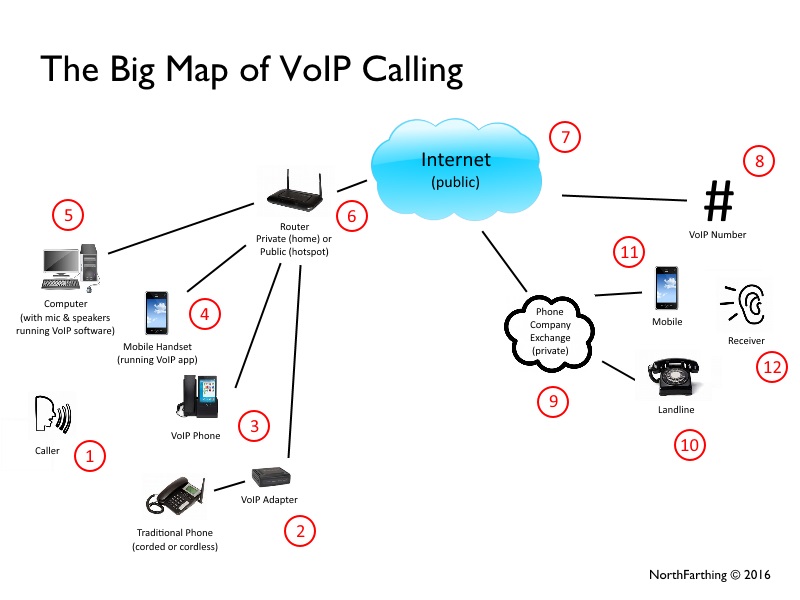
Here’s how Voice over Internet Protocol (VoIP) works without too much techno-babble. Everything described below also works in reverse to receive calls the same way they’re sent.
1. Your voice is picked up by a microphone in a device and converted into an electronic signal (data) just like Alexander Graham Bell did decades ago.
2. The device can be a ‘traditional’ phone, corded or cordless, plugged into a special little box called a VoIP adapter which in turn plugs into your home router. VoIP adapters cost about $25 and most services will give you an adapter for free as incentive to subscribe to one of their calling plans.
3. There are also special phones, again corded or cordless, that have a VoIP adapter built into them. These sorts of phones can be generic or dedicated to one service provider like Skype or Vonage. They also plug into your home router either directly (corded) or via a base station (cordless). The handsets can range in price from $25-$200 depending on the various bells and whistles included. Subscriptions to a service with these devices can range widely in cost but most are just a couple of dollars per month.
4. If you have a mobile smartphone, you can also load an app that connects to a router wirelessly via a Wi-Fi network connection (private home or public hotspot) or mobile service provider (GSM or LTE network). The former is typically free for both the app and the data usage whereas using your mobile provider typically costs airtime minutes and data fees.
5. You can also use software running on your personal computer to make a connection if you have a microphone and speakers connected. Examples of this are Google Hangouts, Yahoo Messenger, and Skype. Most calls between computer-based services are free even to numbers worldwide however sometimes you can incur ‘per-minute’ charges to ring non-computer users (e.g. landlines and mobile phones). Most also offer flat-rate subscriptions that can cover such costs.
6. All of the call data from the various devices – your digitized voice automatically bundled with routing information – is packaged up into data ‘packets’ and sent out to the internet over a router via the same network used for surfing the web, sending email, and watching YouTube videos. This can be over your router at home or with the proper configuration via a router in a public ‘hot spot’ like those found at net cafes and pretty much any Tim Horton’s or McDonald’s on the planet. While you probably don’t want to drag your home phone and adapter out when you go for coffee, most modern mobile smartphones can be set up to connect automatically when in range of an available Wi-Fi network. It’s important to note in that case that you’re * usually * using free Wi-Fi internet data access, not the more expensive mobile phone data plans or ‘cellular minutes’ but be careful because devices can also connect via those paid services as well. A typical voice call uses a fairly insignificant amount of data, about half a megabyte per minute, but it can add up over time if you’re paying per bit used.
7. The internet delivers your packets of data to their destination. Depending on which service you use, this could be free, part of a subscription, or based on per-minute usage. Examples of service brands include Skype, Fongo, MagicJack, Google Hangouts, Yahoo Messenger, Oomla, & Vonage but there are literally hundreds of providers available each with their own particular details and regions of service. Some only offer computer based systems. Some focus on home phone configurations. Others specialize on mobile phone app access. And finally many have a mix of several different platforms available.
The cost of these systems can range from free to rates similar to traditional phone service but generally speaking, most offer a significant discount over “Plain Old Telephone Service” (POTS) prices. The specific costs depend on where and how you call out and whether you need an inbound phone number assigned for others to call you. Subscription services usually offer nearly unlimited calls in your home country or region with wider geographic areas for a fraction of traditional long distance phone service.
One of countless available examples that I’ve used personally for many years is Skype Subscription (above and beyond their free internet service) which has offered outbound dialing to all numbers in the US and Canada for under $3 per month with an extra three bucks per month if you want an assigned inbound phone number* that anyone can dial in upon. Voice mail and other services like Caller ID are usually included by most providers. “Long Distance” means something very different with VoIP and is generally only applicable if you’re dialing to other countries outside your region. Sometimes not even then thanks to the wide-reaching abilities of the internet.
* A long-standing limitation of Skype has been a lack of numbers to assign in Canada. They blame CRTC regulation but most agree it’s an internal company cost-profit benefit analysis preventing such services. They can, however, thanks to the internet assign a non-Canadian number to Canadian subscribers which can be helpful in cross border communications.
Prior to using Skype I had a Vonage account whose rates for a similar home service with an assigned number ran around $20 per month using a traditional phone handset and adapter. Google Hangouts can achieve the same function for free with a personal computer. The cost range simply depends on whose service you choose and what equipment is utilized. In my own experience, call quality once everything is configured correctly sounds roughly the same on most systems with only the occasional hiccup usually solved by a redial. There can of course be notable exceptions depending on your location and setup but the technology has been established for quite some time now. In fact you’ve probably made VoIP calls without realizing it since many calls get routed over the net by phone companies behind the scenes to cut their own costs.
8. If dialing directly to another VoIP user, whether with a particular provider or via a VoIP number assigned to them, the data packets are delivered from the internet to their system or handset without much intervention. This sort of call is almost always free of charge typically noted as ‘free between users of XYZ’s brand service’. This happens automatically and you need only know their phone number or account name to dial, just like a regular call.
9. If you’re connecting to a traditional non-VoIP phone number (landline or mobile), the call data is routed to that local phone company’s network (the ‘telco’) which is then sent on to the receiving number. Bridging the public and private networks is where most charges, if any, are typically incurred but they’re usually pennies per minute and only then if not already included in a subscription service or otherwise free in your region.
10. Your grandmother can pick up her old standard phone and complain about the weather, just like she always has when you call.
11. Your teenager can talk to you from the mall on their mobile phone and ask you for more money, just like they always have when you call.
12. The data is converted back into sounds over a speaker yielding the latest gossip and best pie recipes, just like it always has been on traditional phone devices ever since Bell invented these blasted things.
Clever readers will spot that there is a path through all of this that can indeed offer completely free phone service in many cases. Typically you’re in for a few dollars per month but compared to your local phone company, that’s a bargain. One thing to note however is that emergency dialing (911 or 999) may or may not be included depending on the service you choose.